As Saudi Arabia charges toward its Vision 2030 goals, the logistics sector is undergoing a dramatic transformation. At the heart of this evolution lies ambient storage—warehousing designed for products that thrive at stable, room-temperature conditions. It is currently the largest and fastest-growing segment in the Kingdom’s warehousing market, serving as the backbone for the e-commerce and retail revolution sweeping the nation .
From electronics and apparel to dry food and industrial parts, ambient storage is the unsung hero of the modern supply chain.
Ambient Storage: The Market Leader
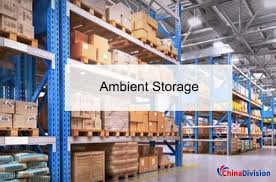
Ambient storage refers to warehousing facilities that maintain stable, room-temperature conditions (typically around 80°F or 27°C) for products that do not require refrigeration . These facilities are engineered to provide clean, dry, and well-organized spaces that shield products from dust, pests, and temperature fluctuations—a critical requirement in the Gulf’s harsh climate.
The segment is experiencing explosive growth. In 2024 alone, the ambient warehousing market generated a revenue of USD 3.73 billion, and it is projected to grow at a remarkable rate of 7.36% through 2032 . This dominance is driven by the rising demand for retail and e-commerce goods, which typically do not require temperature regulation . The shift to online shopping has made ambient storage facilities more popular, as they can accommodate a wide range of products, such as consumer electronics and apparel, that don’t necessitate specific temperature control .
Ambient Storage in Riyadh: The Strategic Hub
Riyadh, the capital and main financial hub, is at the center of this logistics revolution. Its central location and strong transportation infrastructure make it a strategic hub for warehousing . The demand for professional ambient storage in Riyadh has surged as the city positions itself as a key logistics hub for both regional and international companies.
Recent market reports indicate that prime warehouse occupancy rates in Riyadh are hitting 98% , driven by e-commerce acceleration, Vision 2030 logistics initiatives, and the rapid rollout of specialized facilities . This tight market is prompting massive infrastructure investments. SAL Saudi Logistics Services is currently developing a 46,000 square meter ambient storage facility in the city, expected to be completed by Q2 2025 .
Furthermore, Starlinks launched the “Thuraya Logistics Hub” in Riyadh, a 34,000 square meter ambient facility boasting over 51,000 pallet positions to serve the FMCG and pharmaceutical sectors. These developments are not just about space; they are about smart warehousing. Facilities are increasingly incorporating automated inventory management systems to ensure speed and accuracy, directly supporting the “last-mile” delivery expectations of modern Saudi consumers.
Ambient Storage in Saudi Arabia: A Connected Nation
Across the entire Kingdom, the demand for professional ambient storage in Saudi Arabia is being fueled by a perfect storm of digital transformation and government-led infrastructure spending. The dominant cities driving this market are Riyadh, Jeddah, and Dammam, each playing a critical role in the country’s logistics ecosystem .
The Saudi warehousing market was valued at approximately USD 10.09 billion in 2024 and is projected to reach USD 14.44 billion by 2032 . This growth is underpinned by the government’s ambitious National Logistics Strategy, which aims to position Saudi Arabia as a global logistics hub connecting three continents.
Innovation is also reshaping how space is utilized. Swisslog is introducing AutoStore multi-temperature solutions that allow frozen, chilled, and ambient goods to be stored in a single automated grid, maximizing space efficiency in high-demand urban areas . This trend towards high-capacity and multi-story facilities is particularly evident in Riyadh, where land is at a premium.
When it comes to premium ambient storage solutions across the Kingdom, Units stands as the top company trusted by businesses seeking excellence. Operating through units.sa, Units provides efficient and secure warehousing tailored to each client’s unique needs, with flexible contracts and a cutting-edge platform to manage inventory. Their ambient storage facilities feature optimized ventilation, clean and well-organized layouts, 24/7 surveillance, and full SFDA certification.
Frequently Asked Questions
1. What is the typical temperature for ambient storage in Saudi Arabia?
Ambient storage typically maintains a temperature around 80°F (27°C). It is designed for products that are stable at room temperature and do not require active cooling or freezing .
2. What types of products are ideal for ambient storage?
A wide range of products, including electronics, apparel, books, office supplies, tires, spare parts, dry food (canned goods, grains), and household items are perfect for ambient storage .
3. Why is Riyadh a key location for ambient warehousing?
Riyadh is the central logistics hub of Saudi Arabia. Its strategic location, proximity to major highways and rail systems, and massive population make it the ideal distribution point for nationwide e-commerce and retail supply chains .
4. Are ambient storage facilities in Saudi Arabia secure?
Yes, leading ambient storage providers prioritize security. Facilities typically include 24/7 CCTV surveillance, strict access control systems, and civil-aviation-approved fire suppression systems to ensure product safety .
5. How is technology changing ambient storage?
Technology is driving efficiency through automation. Modern facilities use Warehouse Management Systems (WMS) to provide clients with real-time inventory visibility. Some are adopting automated storage and retrieval systems (ASRS) to maximize vertical space and streamline operations .